Sleep Tracking: What You Can Learn From Your Sleep Data
Auf Deutsch lesen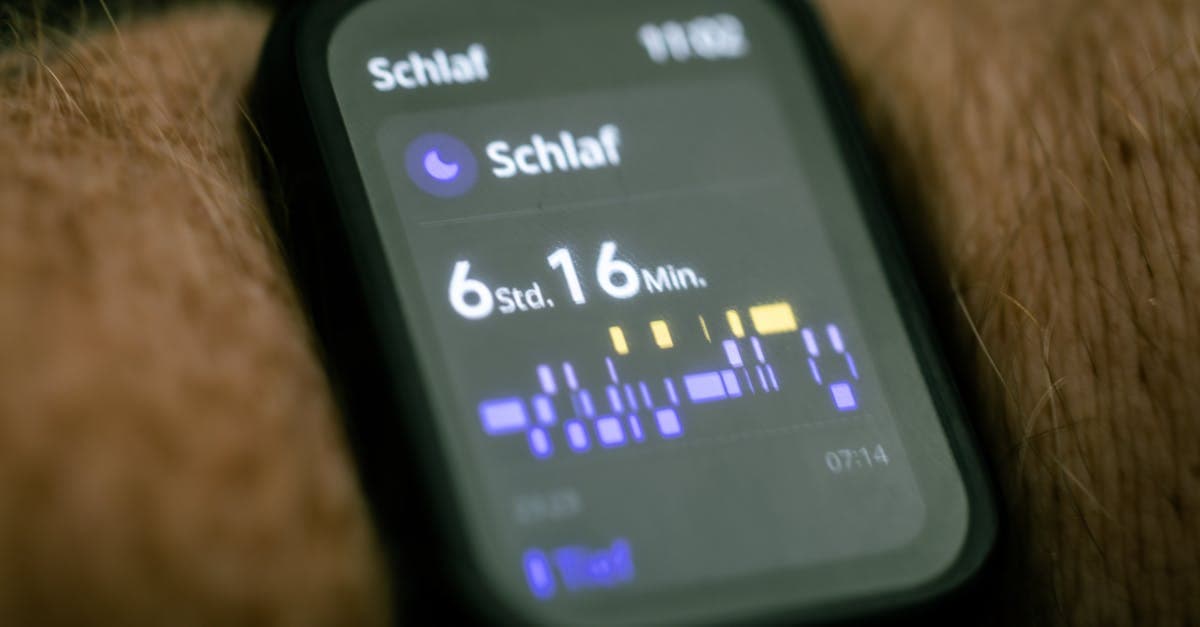
Millions of people now wear smartwatches and fitness trackers that record their sleep every night. Yet most have only a vague idea of what all that data actually means — and fewer still know how to use it to genuinely improve their rest. Sleep tracking is far more than a digital novelty. Used thoughtfully, it can reveal patterns you'd never notice on your own and give you the information you need to make changes that matter.
What Modern Sleep Trackers Measure
Current sleep trackers — whether smartwatches, fitness bands, or sleep rings — capture an impressive amount of data each night. While no consumer device matches the precision of a clinical sleep lab, they provide valuable trends and patterns over time.
The key metrics explained:
Total sleep time: How long you actually slept — distinct from the time you spent in bed. Most adults need 7–9 hours of actual sleep.
Sleep stages: Modern trackers distinguish between light sleep, deep sleep, and REM sleep. Each stage serves a different purpose:
- Light sleep (N1+N2): The transitional and maintenance phases. Approximately 50–60 percent of your total sleep.
- Deep sleep (N3): The most physically restorative phase. This is when growth hormone is released, tissues are repaired, and the immune system is strengthened. Roughly 15–25 percent of sleep time.
- REM sleep: This is where dreaming occurs, and your brain processes emotions and consolidates memories. About 20–25 percent of sleep time.
Sleep onset latency: How long it takes you to fall asleep. Normal is 10–20 minutes. Less than 5 minutes may indicate significant sleep deprivation; more than 30 minutes suggests difficulty falling asleep.
Awakenings: How often and how long you wake during the night. Brief awakenings are normal (we typically wake 5–10 times per night without remembering), but frequent or prolonged wakefulness is not.
Sleep efficiency: The ratio of actual sleep time to time in bed. Values above 85 percent are considered good.
Resting heart rate during sleep: Your heart rate and its trajectory through the night. A declining heart rate in the first half of the night signals good recovery.
Heart rate variability (HRV): A measure of your parasympathetic nervous system activity. Higher HRV during sleep suggests better recovery.
What Your Sleep Data Can Tell You
Raw numbers are only valuable when you know how to read them. Here are the most important insights sleep tracking can provide:
Discover your personal sleep need: The commonly cited 8-hour recommendation is an average. Some people thrive on 7 hours; others need 9. Track your sleep over several weeks and observe how much sleep leaves you feeling your best and most capable.
Identify your optimal bedtime: Your chronotype determines when you should ideally sleep. If you notice that on certain evenings you fall asleep faster and get more deep sleep, you've found your optimal window.
Spot triggers for poor sleep: Perhaps the most valuable application of sleep tracking: finding correlations. Do you sleep worse when you eat late? After drinking alcohol? When you skip exercise? When you use screens before bed? These patterns only become visible when you collect data over time.
Assess recovery quality: Duration alone doesn't tell the whole story. If you sleep eight hours but only 10 percent is deep sleep, your body recovers less than with seven hours at 20 percent deep sleep.
Understanding the Limitations of Sleep Trackers
As useful as sleep tracking is, understanding its boundaries is essential:
Not medical-grade accuracy: Consumer trackers estimate sleep stages using motion sensors and heart rate — not brain wave monitoring like a clinical polysomnography. The sleep stage breakdown is an estimation, not an exact measurement. But trends over time are still highly informative.
Avoid orthosomnia: Some people develop an obsession with their sleep data — they stress so much about their scores that the anxiety itself worsens their sleep. If your tracker is causing more stress than insight, take a break from it.
Focus on relative changes, not absolute numbers: The exact percentages for deep and REM sleep are less meaningful than trends. Compare your data to your own previous weeks, not to abstract ideals.
Connecting Sleep Data to the Rest of Your Life
The real power of sleep tracking emerges when you connect your sleep data with other aspects of your life:
Sleep and nutrition: What and when you eat directly influences your sleep. Heavy meals close to bedtime can reduce deep sleep. Afternoon caffeine can extend sleep onset time. Alcohol may speed up falling asleep but devastates REM sleep architecture.
Sleep and exercise: Regular exercise improves sleep quality — but timing matters. Morning and afternoon workouts generally have positive effects, while intense late-evening training may impair sleep.
Sleep and stress: High-stress days often correlate with worse sleep — less deep sleep, more awakenings, higher resting heart rate. When you see this pattern in your data, it's a clear signal that stress management deserves priority.
Sleep and performance: How do you feel on days following particularly good or poor sleep? What about your energy, focus, and mood? These connections motivate you to take sleep seriously.
How to Use Sleep Tracking Effectively
1. Wear your tracker consistently. Individual nights tell you very little. The value comes from trends across weeks and months.
2. Look at trends, not single nights. One bad night isn't cause for concern. A downward trend over several weeks, however, deserves attention.
3. Experiment and observe. Change one variable (e.g., no caffeine after 2 PM) and observe its effect on your sleep over two weeks. This is how you discover what works for your body.
4. Connect sleep with other data. The most fascinating insights emerge at the intersections: How does your nutrition affect your sleep? How does exercise influence your recovery? What role does stress play?
getNudge does exactly this: the app connects your sleep data with your nutrition, activity, and well-being — helping you see the connections that truly matter. Instead of staring at isolated numbers, you get a holistic picture of your health. Download getNudge today and discover what your sleep data is really telling you.
Track your health with getNudge
getNudge helps you understand the connections between nutrition, sleep, and well-being – with personalized nudges based on your real data.