Functional Training Basics: Exercises for Your Whole Body
Auf Deutsch lesen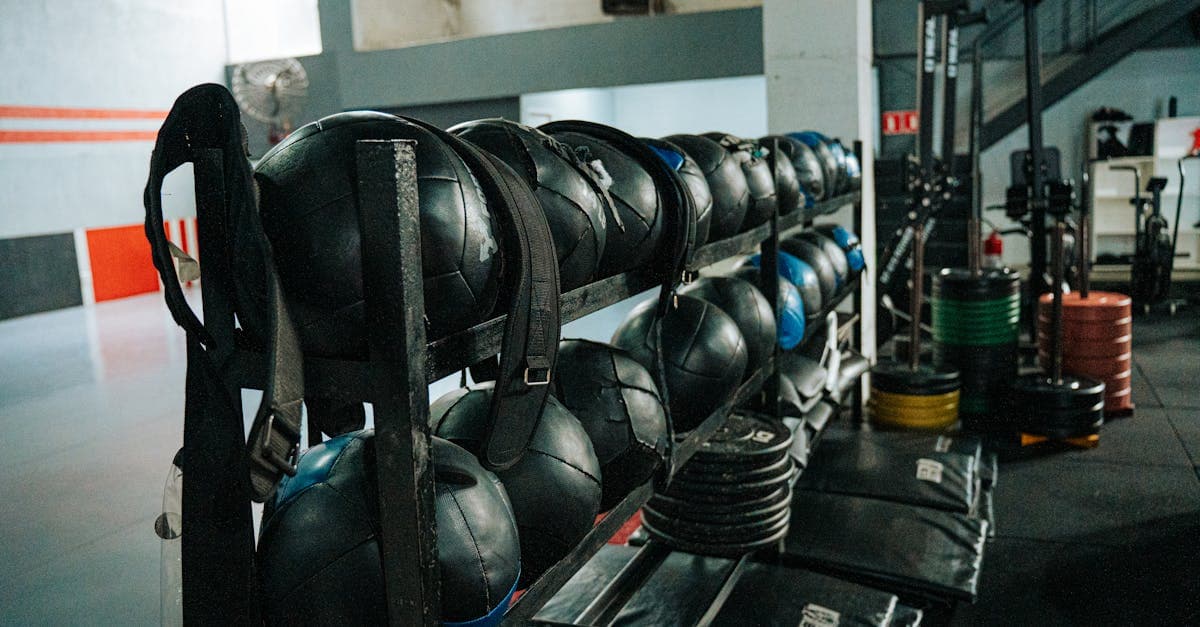
Functional training has surged in popularity in recent years, and for good reason. Instead of isolating individual muscles on machines, you train movement patterns that mirror what you actually do in daily life: lifting, carrying, pushing, pulling, rotating, and stabilizing. The result is a body that doesn't just look strong — it performs strong. Here's your complete guide to the fundamentals and the best exercises to get started.
What Makes Functional Training Different
The core philosophy is straightforward: train movements, not muscles. In real life, your body never works in isolation. When you pick up a heavy box, your legs, back, core, and arms work together. When you reach overhead, your body needs shoulder mobility, core stability, and leg strength simultaneously.
Functional training replicates these natural movement patterns and trains them under load. This offers several advantages over isolated machine training:
Real-world applicability: You get stronger in the movements you actually use — carrying groceries, picking up children, moving furniture.
Better coordination: Since multiple muscle groups must work in concert, the communication between your muscles and nervous system improves.
Higher calorie burn: Compound exercises engage more total muscle mass, burning more calories per exercise than isolation movements.
Injury prevention: By training stabilizers and smaller supporting muscles alongside the prime movers, you become more resilient against injuries.
Time efficiency: Since each exercise works multiple muscle groups simultaneously, you accomplish more in less time.
The 7 Foundational Movement Patterns
Functional training is built on seven fundamental movement patterns. An ideal session should cover all of them:
1. Squat The foundation for sitting down, standing up, and lifting anything from the ground.
- Goblet Squat: Hold a kettlebell or dumbbell at your chest and perform a deep squat. The front-loaded weight encourages an upright posture.
- Benefits: Trains quads, glutes, core, and upper back simultaneously.
2. Hip Hinge Bending from the hips — essential for everything you pick up from the floor.
- Kettlebell Deadlift: Stand over a kettlebell, grip it with both hands, and lift by extending your hips. Keep your back straight throughout.
- Benefits: Strengthens the entire posterior chain — glutes, hamstrings, and lower back.
3. Push Everything you push away from you — opening a door, pressing something overhead.
- Push-ups: The quintessential horizontal pushing exercise.
- Overhead Press: Press dumbbells or kettlebells overhead for vertical pushing power.
4. Pull Everything you pull toward you — opening a drawer, reaching for something on a shelf.
- Dumbbell Row: Bent over, one arm pulls the weight toward your hip. Trains back and biceps.
- TRX Row or Pull-ups: Advanced pulling exercises for the entire back.
5. Lunge Single-leg stability — critical for walking, stair climbing, and changing direction.
- Walking Lunges: Take large alternating steps forward, lowering the back knee toward the ground.
- Benefits: Trains legs unilaterally and challenges balance.
6. Rotation Twisting movements — essential for sports and everyday actions like throwing, reaching, and turning.
- Pallof Press: With a resistance band at chest height, extend your arms and resist the rotational pull.
- Russian Twist: Seated with a slight lean back, move a weight from side to side.
7. Carry Carrying objects — one of the most practical everyday movements.
- Farmer's Walk: Pick up two heavy dumbbells or kettlebells and walk a set distance. Core tight, shoulders down.
- Benefits: Builds grip strength, core stability, and total-body tension.
Your Functional Training Starter Plan
This workout takes approximately 35–40 minutes and covers all foundational patterns. Perform it two to three times per week.
Warm-up (5 minutes): Cat-Cow, hip circles, arm circles, light jogging in place
Main workout (25–30 minutes):
| Exercise | Sets | Reps | Rest | |---|---|---|---| | Goblet Squat | 3 | 10–12 | 60 sec | | Kettlebell Deadlift | 3 | 10–12 | 60 sec | | Push-ups | 3 | 8–12 | 60 sec | | Dumbbell Row | 3 | 10 per arm | 60 sec | | Walking Lunges | 3 | 8 per leg | 60 sec | | Pallof Press | 3 | 10 per side | 45 sec | | Farmer's Walk | 3 | 30 meters | 60 sec |
Cool-down (5 minutes): Light stretching of all worked muscle groups.
Equipment You Need to Get Started
Functional training requires minimal equipment. To start, you need:
- A kettlebell (26–35 lbs / 12–16 kg for men, 18–26 lbs / 8–12 kg for women): Arguably the most versatile training tool in existence. Swings, squats, deadlifts, presses — it does everything.
- Resistance bands: Inexpensive and incredibly versatile for warm-up, mobility, and strengthening exercises.
- A mat: For floor-based exercises.
As you progress, you can add dumbbells, TRX straps, medicine balls, and parallettes — but to start, your body weight and a single kettlebell are more than enough.
Common Mistakes to Avoid
Progressing too quickly: Functional training engages many small stabilizer muscles that adapt more slowly than the big movers. Increase weight and complexity gradually.
Sacrificing form for weight: Movement quality matters more than the number on the weight. A perfect goblet squat with 25 lbs delivers more benefit than a sloppy one with 50 lbs.
Skipping the warm-up: The full-body nature of functional training demands a thorough warm-up. Never skip it.
Doing the same thing every time: Regularly vary exercises, weights, and rep ranges. Your body adapts to routine — variation keeps progress moving.
Documenting your training progress reveals where you're getting stronger and where there's room for improvement. It helps you train more strategically and stay motivated over time.
getNudge helps you track your workouts and understand the connection between exercise, nutrition, and recovery. The app shows you how functional training improves your overall fitness — with personalized insights based on your real data. Download getNudge today and train smarter.
Track your health with getNudge
getNudge helps you understand the connections between nutrition, sleep, and well-being – with personalized nudges based on your real data.