Keeping a Food Diary: Why It Works and How to Start
Auf Deutsch lesen
If there's one tool that nutritional research consistently highlights as remarkably effective, it's the food diary. Studies show again and again that people who write down what they eat make better food choices and achieve their health goals more often. No diet plan, no superfood, and no supplement has such a solid evidence base. But why does it work so well, and how do you do it right without it becoming a chore?
Why a Food Diary Is So Powerful
The awareness effect
The most important mechanism behind food logging is simple: awareness. Most people have no real idea how much they actually eat. Research shows that the majority underestimate their calorie intake by 30-50%. Not because they're lying, but because mindless eating is everywhere – the cookie with your coffee, the handful of chips in front of the TV, the sip of juice between meals.
When you write down what you eat, that unconscious consumption suddenly becomes visible. And visibility alone changes behavior. You reach for snacks less often when you know you'll log them. Not out of shame, but because a conscious decision feels different from an automatic one.
Spotting patterns
A food diary reveals patterns you'd otherwise miss:
- What times of day do you eat the most?
- Which situations trigger snacking (stress, boredom, social events)?
- Do you eat differently on certain days of the week?
- How are protein, carbs, and fat distributed throughout your day?
Accountability to yourself
Logging creates a sense of accountability – not external pressure, but a personal commitment. This effect is especially strong when you maintain the diary consistently and periodically look back at your entries.
Better real-time decisions
When you know that your breakfast already included 500 calories from sugar, you might naturally choose a more balanced option at lunch. The diary gives you the information foundation for better decisions in the moment.
How to Start Your Food Diary
Step 1: Choose your method
There are several ways to keep a food diary:
App-based: The most convenient and accurate approach. Apps with barcode scanners and food databases make logging fast and simple. getNudge lets you track your nutrition while simultaneously seeing the connections to sleep, exercise, and wellbeing.
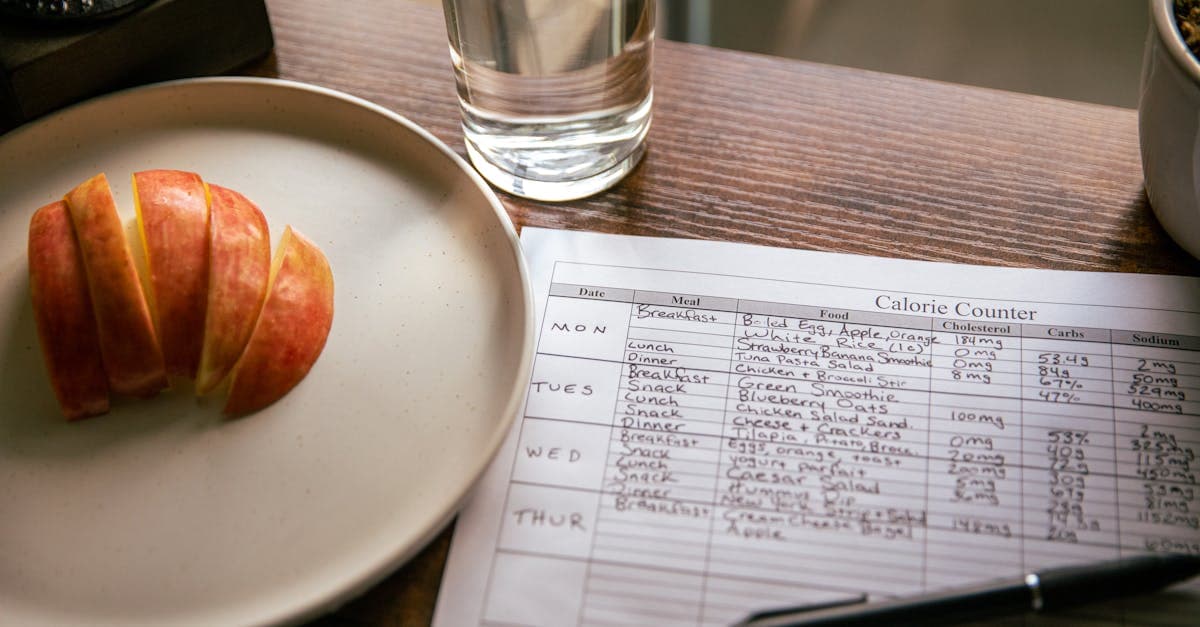
Notebook: Analog, personal, and screen-free. Great for people who prefer handwriting. Downside: nutritional values need to be looked up manually.
Photos: Photograph every meal. Quick, uncomplicated, and visually intuitive. Good as a starting point, but less detailed than written tracking.
Step 2: Define what you track
You don't need to count calories, macros, and micronutrients from day one. Start simple:
Level 1 (beginner): Write down what you eat and when. No quantities, no calories. This alone creates awareness.
Level 2 (intermediate): Estimate portion sizes and note approximate calories. Apps help with preset portions.
Level 3 (detailed): Track macronutrients (protein, carbs, fat) and pay attention to specific micronutrients that matter to you.
For most people, level 1 or 2 is more than enough to drive positive changes.
Step 3: Be honest, not perfect
A food diary only works if you're honest – even about the things you'd rather not write down. The afternoon candy bar, the third beer on Friday night – these entries are actually the most valuable because they show where you can make changes.
At the same time: it doesn't need to be perfect. If you miss a meal, that's not a reason to quit. Tracking 80% is infinitely better than tracking 0%.
Step 4: Find your rhythm
When should you log? Two approaches work well:
- Real-time: Log immediately after each meal. Advantage: nothing gets forgotten. Disadvantage: can feel interruptive.
- Evening recap: Summarize the entire day once in the evening. Advantage: fewer interruptions. Disadvantage: details can be forgotten.
Try both and stick with whichever feels more natural.
Common Food Diary Mistakes
Forgetting drinks: Liquid calories add up fast – juices, lattes, soft drinks, and alcohol. Don't forget to log them.
Ignoring sauces and dressings: A generous drizzle of olive oil or salad dressing can easily add 100-200 calories. These "small things" are often a blind spot.
Only tracking "good" days: The diary is most valuable when it's honest. The days you overeat provide the best insights.
Getting too obsessive: If tracking becomes a source of stress, it defeats the purpose. Approximate values are better than perfect numbers that drive you crazy.
Giving up too soon: Most patterns only become visible after 2-3 weeks. Give yourself enough time.
Food Diaries and Emotional Eating
One particularly valuable aspect of food tracking: it helps you recognize the connection between emotions and eating. If you note how you're feeling alongside what you eat, you might discover that you reach for sweets when stressed, snack when bored, or eat more when sad.
This awareness is the first step toward change. You can't change what you can't see. Once you know your triggers, you can develop alternative strategies – a walk instead of the candy bar, a phone call instead of the bag of chips.
From Diary to Holistic Health Tracking
A food diary on its own is valuable. But it becomes even more powerful when you connect it with other health data. How does your diet affect your sleep? Do you have more energy on days when you eat a protein-rich breakfast? Do you sleep worse when you eat heavy meals late?
getNudge connects your nutrition tracking with sleep, exercise, and mood data – making these connections visible. Your food diary becomes the starting point for a comprehensive understanding of your health.
Download getNudge and keep your food diary where all your health data comes together. Spot patterns, understand connections, and make better choices – powered by data, built for everyday life.
Track your health with getNudge
getNudge helps you understand the connections between nutrition, sleep, and well-being – with personalized nudges based on your real data.