Core Training: The Most Effective Exercises for a Strong Center
Auf Deutsch lesen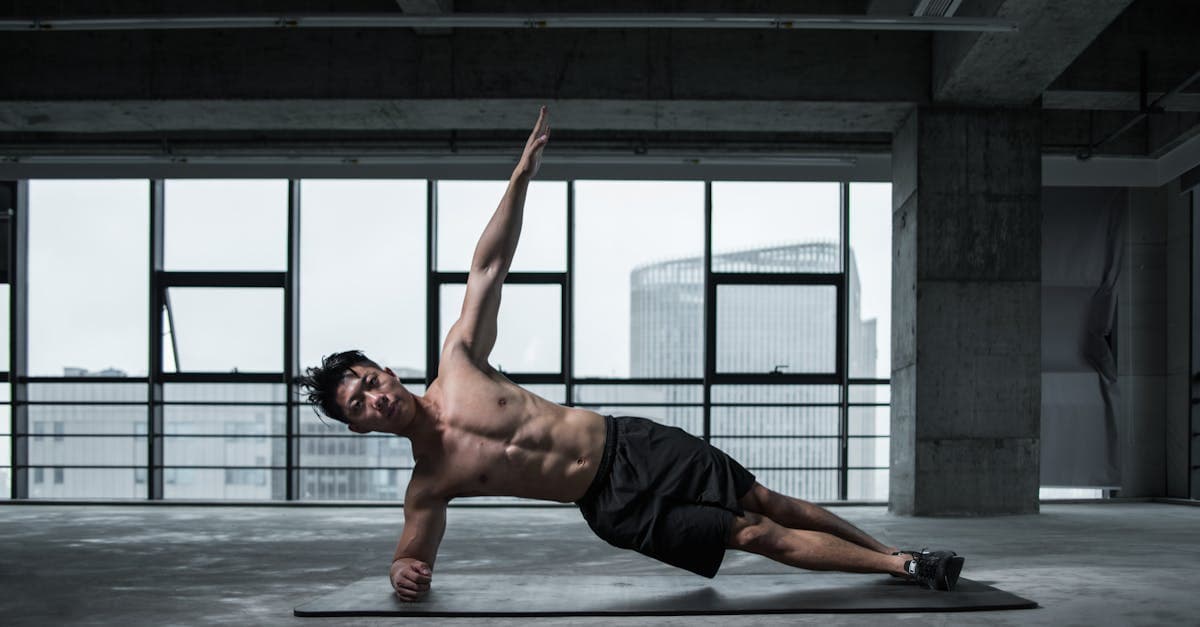
A strong core is far more than a visible six-pack. Your midsection is the foundation for every movement — whether you're carrying groceries, playing sports, or simply sitting upright at your desk. A weak core leads to back pain, poor posture, and limited athletic performance. Here's what the core really is, which exercises are most effective, and how to build a training plan that actually delivers results.
What the Core Actually Is
When most people hear "core," they think of the six-pack muscles. But the core is a much more complex system of muscles that surround and stabilize your entire trunk.
The key core muscles:
- Rectus abdominis: The "six-pack" — responsible for trunk flexion. Important, but only one piece of the puzzle.
- Obliques: Inner and outer layers, responsible for rotation and lateral bending. Critical for stability during twisting movements.
- Transversus abdominis: The deepest abdominal layer. Acts like a corset, protecting internal organs and stabilizing the spine. The most important stabilizer of all.
- Erector spinae: The back extensors that oppose the abdominal muscles. Without strong back extensors, there's no stable core.
- Multifidii: Small, deep muscles attached directly to vertebrae for segmental stability.
- Diaphragm and pelvic floor: These form the "lid" and "floor" of the core cylinder and play crucial roles in trunk stabilization.
Why this matters: If you only do crunches, you're training just the rectus abdominis while neglecting the muscles that actually provide stability, back protection, and functional strength. Effective core training must address all of these muscles.
Why Crunches Aren't Enough
Crunches and sit-ups are the most popular ab exercises — and simultaneously the most overrated.
The problems with crunches:
- They primarily train the rectus abdominis in a movement (trunk flexion) that rarely occurs in daily life
- Repeated spinal flexion under load can stress the intervertebral discs
- They barely engage the deep stabilizers
- Visible abs depend primarily on body fat percentage — not on the number of crunches you do
What works instead: Anti-movement exercises — exercises where the core must resist movement rather than create it. This mirrors its actual function: stabilizing the spine while the limbs move.
The Most Effective Core Exercises
1. Plank (Anti-Extension)
The foundation of all core exercises. Forearm support position, body forming a straight line from head to heels. Actively brace your abs and glutes. Hold 30–60 seconds, 3 sets.
Progressions: single-arm or single-leg variations, weighted vest, limb raises from plank position.
2. Pallof Press (Anti-Rotation)
Using a cable machine or resistance band: hold the band at chest height and press your hands straight forward. Resist the rotation the band wants to create. 10 reps per side, 3 sets.
This exercise trains rotational stability — essential for sports involving twisting and for protecting the lumbar spine.
3. Dead Bug (Coordination and Stability)
Lie on your back with arms reaching toward the ceiling and legs at 90 degrees. Simultaneously lower your right arm overhead and extend your left leg forward while keeping your lower back pressed into the floor. 10 reps per side, 3 sets.
The dead bug trains upper-lower body coordination and powerfully activates the transversus abdominis.
4. Side Plank (Anti-Lateral Flexion)
Lie on your side supported by one forearm, body forming a straight line. Don't let your hips sag. 20–40 seconds per side, 3 sets.
Progressions: hip dips in side plank, top leg raised.
5. Farmer's Walk (Functional Core Stability)
Pick up two heavy weights (dumbbells, kettlebells, or heavy bags) and walk upright for 30–40 meters. Keep your trunk stable and tall. 3 rounds.
The farmer's walk trains the entire core under real-world loading conditions while improving grip strength and posture.
6. Ab Wheel Rollout (Advanced)
Kneeling with an ab wheel: roll slowly forward as far as you can without letting your lower back sag. Pull yourself back. 8–12 reps, 3 sets.
One of the most demanding core exercises, challenging the entire anterior chain.
Training Plans for Every Level
Beginner (Weeks 1–6) — 3 times per week:
| Exercise | Sets | Reps/Duration | |---|---|---| | Plank | 3 | 20–30 sec | | Dead Bug | 3 | 8 per side | | Glute Bridge | 3 | 12 | | Side Plank | 2 | 15–20 sec per side | | Bird Dog | 3 | 8 per side |
Intermediate (Weeks 7–16) — 3–4 times per week:
| Exercise | Sets | Reps/Duration | |---|---|---| | Plank | 3 | 45–60 sec | | Pallof Press | 3 | 10 per side | | Dead Bug | 3 | 12 per side | | Side Plank with Hip Dip | 3 | 10 per side | | Farmer's Walk | 3 | 30 meters |
Advanced (Week 17+) — 4 times per week:
| Exercise | Sets | Reps/Duration | |---|---|---| | Ab Wheel Rollout | 3 | 8–12 | | Pallof Press | 3 | 12 per side | | Weighted Plank | 3 | 60 sec | | Dragon Flag (progressions) | 3 | 5–8 | | Heavy Farmer's Walk | 3 | 40 meters |
Integrating Core Training Into Daily Life
As part of strength training: Add 10–15 minutes of core work at the end of your strength sessions. Core muscles already work as stabilizers during compound lifts (squats, deadlifts, presses) — targeted core work supplements that.
As a standalone mini-workout: Fifteen minutes of core training in the morning or during lunch break. Needs minimal space and no equipment.
Built into everyday life: Consciously engage your core while standing, sitting, and walking. Carry groceries with an upright posture. Stand on one leg while brushing your teeth. Small activations throughout the day add up.
Don't forget: nutrition and body fat. Even the strongest core stays invisible beneath a layer of fat. Visible abs typically require body fat below 15 percent for men and below 22 percent for women. You achieve that through nutrition management, not through more crunches.
Train your core systematically with getNudge. The app helps you track your workouts, monitor your nutrition, and make progress visible. With personalized recommendations, you'll build a strong center that improves every aspect of your fitness. Download getNudge today and strengthen your foundation.
Track your health with getNudge
getNudge helps you understand the connections between nutrition, sleep, and well-being – with personalized nudges based on your real data.